- Copyright © 2026 Shaeli Car Tyres,Spares & Accessories


Shaeli Car Tyres,Spares & Accessories Team
·
September 12, 2026
·
Tyre rotation, wheel alignment and wheel balancing are often mentioned together at a garage or tyre centre.
It’s easy to assume they’re all basically the same thing.
They’re not.
Each one deals with a different part of your car’s tyre and wheel setup.
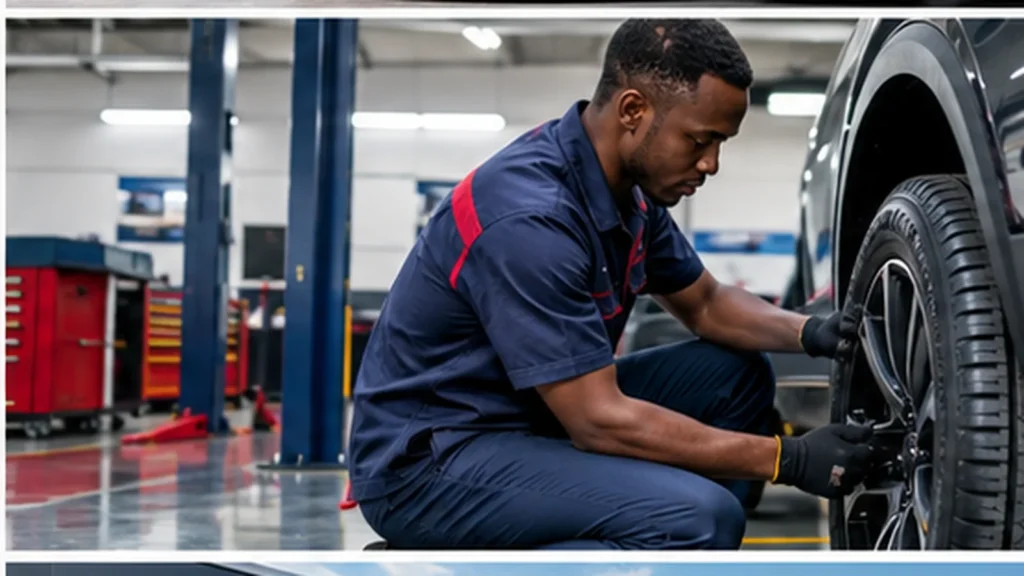
Tyre rotation means moving tyres from one position on the vehicle to another.
For example, a tyre may be moved from the front axle to the rear, depending on the vehicle and recommended rotation pattern.
The purpose is to help the tyres wear more evenly.
Because different wheels can experience different amounts of wear, regular rotation can help you get more consistent use from the set.
Alignment is about the angles of the wheels in relation to each other and the road.
When alignment is off, you might notice your vehicle pulling to one side, an off-centre steering wheel or uneven tyre wear.
Hitting potholes or kerbs can sometimes affect alignment.
If your tyres are wearing strangely, don’t just replace them and assume the problem is solved. The underlying alignment issue may still be there.
Balancing deals with the distribution of weight around the wheel and tyre assembly.
When a wheel is out of balance, you may experience vibrations, particularly at certain speeds.
A tyre professional can use a balancing machine to identify where weights are needed to correct the imbalance.
Think of it this way:
Rotation helps manage tyre wear.
Alignment helps keep the wheels pointing correctly.
Balancing helps the wheel and tyre rotate smoothly.
They solve different problems, but all are useful parts of proper tyre maintenance.
If your car starts pulling to one side, vibrating at speed or wearing tyres unevenly, don’t ignore it.
Getting the issue checked early can save you from unnecessary tyre wear and potentially a much bigger repair bill later.
Share: